Thomas D Lee’s Perilous Times was one of the first books I read this year, and one of the first reviewed on PotsandPlots. It blew me away how good it was. A tale of climate change and right-wing populism that features The Knights of the Round Table, how could that possibly work?
It does. Brilliantly. The melding of myth and political satire to create an excoriating but highly readable adventure about the follies of man. Perilous Times was such a good read that I broke my “wait for the paperback rule” and purchased The Knight Watch in hardback.
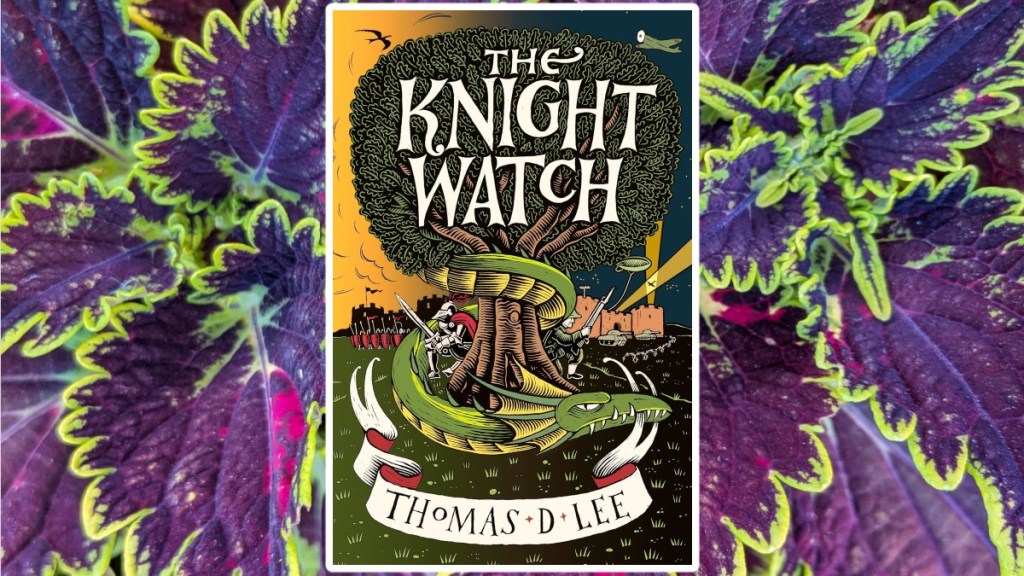
The Knight Watch is a prequel story, set during World War II. Elements of this story are mentioned in Perilous Times, but in The Knight Watch, we discover more about Lancelot, Kay and the rest of the Knights as they return once again to rescue England during its darkest hour. Centre stage of the novel is the now centuries-old relationship between Tristan and Isolde.
While you don’t have to read Perilous Times first, I recommend that you do, as it explains better how the Knights return, and gives more insight into how their battling together down the ages informs their relationships, for good and ill.
Growing Information:
Plant With: Arthurian Myth, World War II, Speculative History.
Grows Into: A story about the power of being yourself.
Rating: Hardy Perennial 🌻🌻🌻(Check here for rating information.)
Available now in Hardback (affiliate link).
The Review:
The Knight Watch is less overtly political than Perilous Times. In the first book, the Knights fight corporate greed and right-wing populists, enemies that don’t often get the beating they deserve in contemporary society. In The Knight Watch, the enemy is the Nazis, who are incontrovertibly evil. There’s no political take there.
The politics of The Knight Watch are more subtle. It subverts both Arthurian myth and classic war movies. In particular, the machismo associated with both. There is a repositioning of gender roles that will probably infuriate the same people upset by Christopher Nolan’s The Odyssey. As they’ll almost certainly never read this book or examine what Lee is trying to do with the source material, we needn’t care about them too much. Instead, we can enjoy the rich and multifaceted Round Table that Lee has treated us to.
Lee’s author biography on the book jacket mentions that he specialises in “queer interpretations of the Arthurian mythos.” This is more evident in The Knight Watch than in Perilous Times. In the first book, the LGBTQ themes were an adjunct to the main story; here, they’re front and centre. They’re what make the novel tick and give it its heart. (Perhaps a heart with a pacemaker, if it’s ticking? I’m not a real writer, so forgive my mixed metaphors.)
The central story of occult Nazis is one people will recognise from countless alternate history stories set in the war. The alliance between the Nazis and some ancient witches isn’t a new idea either. Nevertheless, Lee’s coven is a feisty and truly abhorrent bunch, which left me terrified as to what they might do. They form an original take on a well-represented idea.
At the start of the book, I was concerned that The Knight Watch might descend into caricature. The Knights are largely vainglorious and useless, the women (apart from the witches) unequivocally noble and uber-competent. It felt borderline pastiche and lazy. I need not have worried.
Lee showed in Perilous Times that he is an author who can weave a subtle tale, and the same is true in The Knight Watch. The story gradually becomes a warning against toxic masculinity, examining the negatives of jokey blokey camaraderie.
More importantly, it lays bare the myth of the strongman. It stresses the importance of speaking your fears, and describes the difficulty men have talking to one another, while pressing home why it is important to do so.
“‘This is all getting a bit touchy-feely for my liking,’ says Agravain
‘That’s not helping’ says May. ‘If you lash out at everyone whenever you feel uncomfortable, you’re just making the problem worse…We ought to be able to talk to one another without worrying we’re going to be laughed at.’”
As a whole, The Knight Watch is another excellent novel. The Knights in the book are raw and real, despite being reincarnated numerous times. As the novel closes, we feel their humanity in an almost visceral fashion.
Much like Perilous Times, The Knight Watch is wickedly funny. There’s a homage to Monty Python and the Holy Grail that made me snort out loud, but there are many other times when Lee shows he can do comedy, not least when the Knights are squabbling.
If you had to read only one of Lee’s novels, Perilous Times probably edges The Knight Watch, but fortunately, we don’t live in prescriptive times, so you can read both. I wholeheartedly recommend that you do. Lee’s reinterpretations of the Arthur story shed light on the bit parts and forgotten players, and the lore and myths he constructs around them are absorbing, heartbreaking and utterly compelling.


Leave a Reply