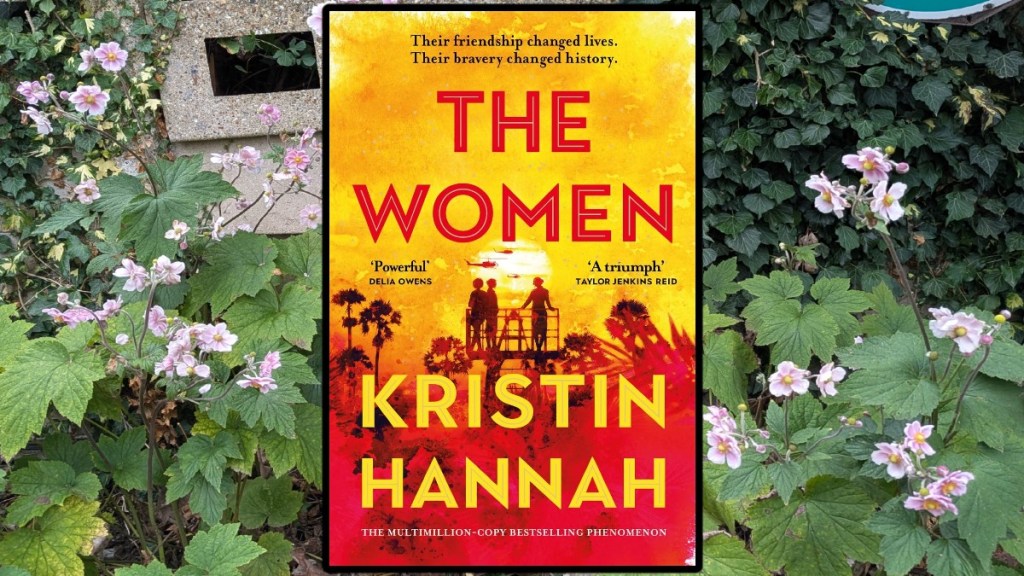
Continuing my intermittent series of reviews nobody needs is The Women by Kristin Hannah; my next book group choice.
This book has 345,000 reviews, over 70% of which are 5*. It’s easy to see why. That said, while its story is both captivating and harrowing, its merits are all on the surface. I felt that it lacked depth.
Growing Information:
Plant With: Vietnam War, Sexism, Strong Female Friends.
Grows Into: A harrowing examination of field hospitals during the Vietnam War and its lingering aftershocks.
Rating: Vibrant Annual 🌻🌻(Check here for rating information.)
Available now in paperback (affiliate link).
The Review:
In The Women, Frankie is the daughter of wealthy Californians. The novel opens at the beginning of the Vietnam War, with Frankie’s brother about to set off and do his duty. Inspired by him and her father’s pride in their family’s service, Frankie signs up as an army nurse.
Before she deploys, news comes that her brother is missing in action, presumed dead. Against this background, she arrives in Vietnam grieving and utterly unprepared for what is to come.
What follows is a brutal baptism of fire, as Frankie comes to terms with the devastation of field combat. Supported by two other nurses, she goes from green recruit to hardened battlefield nurse.
Kristin Hannah’s prose is readable throughout as she plunges us into the horrors of war. Wave after wave of injured men arrive for Frankie to treat. There are quiet, more contemplative moments too, when Frankie relaxes with friends or heads into the local village to try to do some good there.
The author maintains a good balance between the combat action sequences and Frankie’s building of relationships, both with the female nurses and male doctors; will romance bloom? Quite possibly. Vietnam is tough, and some emotional release is needed.
Yet Frankie comes from a WASPish family (though they might be Catholic, I can’t quite remember). Display of emotion is discouraged. “Carry on regardless” is their motto.
This does not hold Frankie in good stead for the second part of the novel, when she returns home from the war after serving two terms. Her story switches from tales of bloody heroism and the senseless waste of life to an examination of the aftermath of war for those returning home.
With news that US soldiers committed war crimes in Vietnam, public opinion has turned against military personnel. Frankie is an embarrassment to her family, her medical baptism is meaningless to those who might employ her, and many people, including fellow veterans, don’t even believe women were in Vietnam. She is also suffering from the yet-to-be-understood effects of PTSD.
All this, and her dealing with the fallout of a Vietnam-side romance, combined with her need to keep a lid on everything, forces Frankie into a downward spiral that ultimately has catastrophic consequences. Hannah keeps Frankie’s story compelling, while charting her undulating fortunes and mental stability. It’s affecting stuff.
And yet I wasn’t entirely convinced. Hannah draws her readers’ attention to the plight of Vietnam veterans and the travesty of the refusal to acknowledge the women who served over there. She pulls back the curtains on the absurdity of the US position on Vietnam, and the futility and brutality of war.
But I found Frankie’s travails were only ever surface-deep. I haven’t talked about the book’s romantic elements. They unrelentingly pile on the misery to Frankie, in a way that I think ultimately diminishes the story as a whole. I guess there was nothing particularly unbelievable about the events, but somehow the fact that Frankie could never catch a break made her story less convincing.
The characters felt almost like ciphers for real people. The book is most definitely about the importance of friendship to help you through tough times, but by the end of the book, Frankie’s friends felt like they existed solely for the purpose of carrying Frankie through her misery memoir.
I’m struggling to pinpoint exactly why I found The Women on the thin side. Ultimately, its characterisation fell short. This is not Birdsong or Captain Corelli’s Mandolin. It definitely isn’t Angel Down, which explores some similar themes.
Perhaps these are unfair comparisons; very few books stand up to those three. The Women is undoubtedly more readable than any of them. This is a true page-turner, albeit a relentlessly gloomy one. At points, the misery felt gratuitous; I felt manipulated into feeling for Frankie. Her wartime experiences alone were more than enough to create a compelling story, without the relentless piling on of misery. This is a shame, as The Women examines some important aspects of conflict and its aftermath.
Ultimately, I leave this review where I came in. I see why The Women has been such a popular read. It’s highly emotive. Whether you find that emotion performative is probably a matter of personal opinion.


 PotsandPlots
Leave a comment