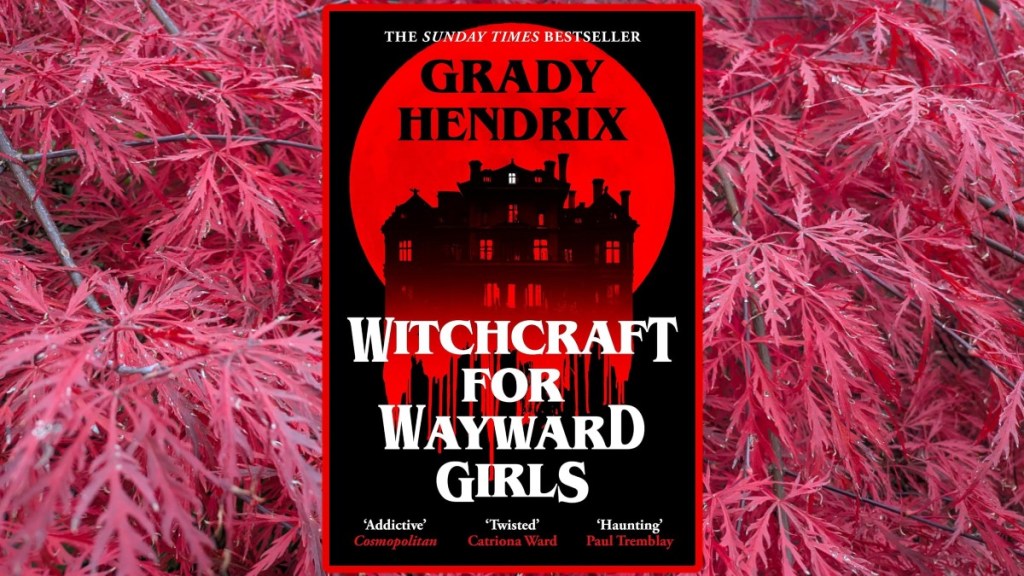
The choice for my book group in October was a spooky read, as befits the season. Witchcraft for Wayward Girls had previously floated across my radar, but I thought probably wasn’t quite for me.
Without book group, then, I would never have read this book, but I’m glad that I did. It’s upsetting and makes for uncomfortable reading, but this is a well-crafted story with an important message at its centre.
Growing Information:
Plant With: Horror, Witchcraft, Roe v. Wade
Grows Into: A chilling examination of a forgotten time, and a still all too prevalent attitude.
Rating: Vibrant Annual 🌻🌻(Check here for rating information.)
Available now in paperback (affiliate link).
The Review:
Witchcraft for Wayward Girls is a more visceral, more sensational version of Claire Keegan’s Small Things Like These, shining a light on the cruel and inhumane treatment of young mothers. In Witchcraft’s case, in 1970s America, crucially before the advent of Roe v. Wade and a woman’s right to choose.
If you want a 500-page argument for why revoking Roe v. Wade was a stupid idea, Witchcraft for Wayward Girls makes a compelling one.
As the novel opens, pregnant Neva is being driven by her father to Florida. Here she will be left at a home for unwed mothers to have her baby. She is thrown in with a host of other unwed girls, all with their names changed. They will deliver their babies, give them up for adoption and return to their lives, where they will forget about what happened and become fully functional members of society. Or that’s the theory according to the allegedly well-meaning adults in the room.
Neva becomes Fern – all the girls are given floral names, which leans into the witchcraft elements of the book. She suffers the indignity of workhouse-like conditions and condescending, incompetent (male) doctors. Inevitably, it is through bonding with the fellow inmates of the home that Neva/Fern survives her ordeal.
The story would have been a compelling one, even without the supernatural elements. These elements are introduced by an ageing librarian, who gives Neva a book of spells. The girls use one of these spells to transfer crippling morning sickness to the aforementioned condescending, incompetent male doctor.
To their amazement, the spell works. With spectacular and hilariously horrific results. This leads the girls further down a path of witchcraft, where they will form a Faustian pact, without being fully aware of its full implications.
Witchcraft is a chunky tome, and a lot is going on. Above all, it’s about the power of women. There are very few men in the book, and all of them make terrible choices. Most of them are awful people; all of them are misguided, and one of them is a truly evil literary creation.
There is undoubtedly a sense of dread and menace imbued by the witches in the book, but that is not where the horror lies. Yes, there are some spine-tingling moments as the coven tries to exert the force of their wishes on Fern and her friends, but the true horror comes from more mundane sources.
The horrors come from the controlling hierarchy of the home, the men who have impregnated their girlfriends before denying all culpability, the families that allow them to do so, and, of course, the truly evil literary creation. The evils in the book are often cultural and derived from human frailty.
The system in which these poor girls have to exist is horrific too. Inhuman and inhumane. Young pregnant women, some as young as 14, are offered no comfort or solace for their predicament. They’re treated as though they were the sole architects of their downfall. It was distressing to read their plight. More distressing to consider, that, while social mores have changed to an extent, many girls still face the same indifference and censure today.
The most terrifying and powerful piece of writing in the book was when Fern actually has her baby. There are some supernatural shenanigans going on around the arrival of the baby, but the birth scene is unadulterated real-life. If you are pregnant right now, I recommend not reading this book.
Having been present at the birth of a child three times, albeit on the much easier hand-holding and soothing noises side of the equation, I found Hendrix’s rendition of the delivery process right on point, especially for a birth 50 years ago.
This process, that culture and society tell us is wonderful and magical, is hard work, primal and potentially deadly. The childbirth scene was the scariest in the whole book. Otherworldly in many ways and yet completely real. Much like childbirth itself. This juxtaposition of natural horror and supernatural scare was the book’s outstanding moment.
Grady also examines the importance of midwives and their role in safe deliveries. There is an absurdity in allowing men to control the process when the entire thing could continue without male input, apart from maybe a small and fleeting contribution right at the very beginning.
While I’m not completely convinced by the “natural is best” thesis put forward by the book, I do concur with the importance of incorporating the female experience into childbirth protocols. This remains as true today as it was in the 1970s, yet seems to be consistently overlooked.
Witchcraft for Wayward Girls does something that all the best genre fiction does. Within the confines of a horror novel, Grady Hendrix examines and poses serious moral questions about the real world.
I think perhaps the witchcraft elements of the book are overplayed. Apart from an initial catalyst to spark the girls’ camaraderie, I’m not sure the occult elements added that much to the book. That said, without them it would have been a very different, more stark novel. It would also have been shorter, which might have been a blessing, as there were times when the narrative didn’t particularly feel like it was going anywhere.
While it is 100 pages too long, Witchcraft for Wayward Girls is a powerful read which uses horrors from the past to make us consider whether things have changed very much at all. Stigma and prejudice against young mothers are still rife, and the rise of the online right has pushed women’s reproductive rights firmly backwards. Not a perfect novel, but one with a depth that belies its premise. Yes, this is a horror story, but its horrors are myriad, and its monsters are all too real.


Leave a Reply